Callum Fallows

UI / UX design and front-end development · Manchester

I make products that are simple to use

I'm Callum. I enjoy figuring out how to make products that are simple to use. I've worked with start-ups and product teams on web and mobile apps, designing the experience and then building it.

Selected work

3 case studies, 2020 to 2026

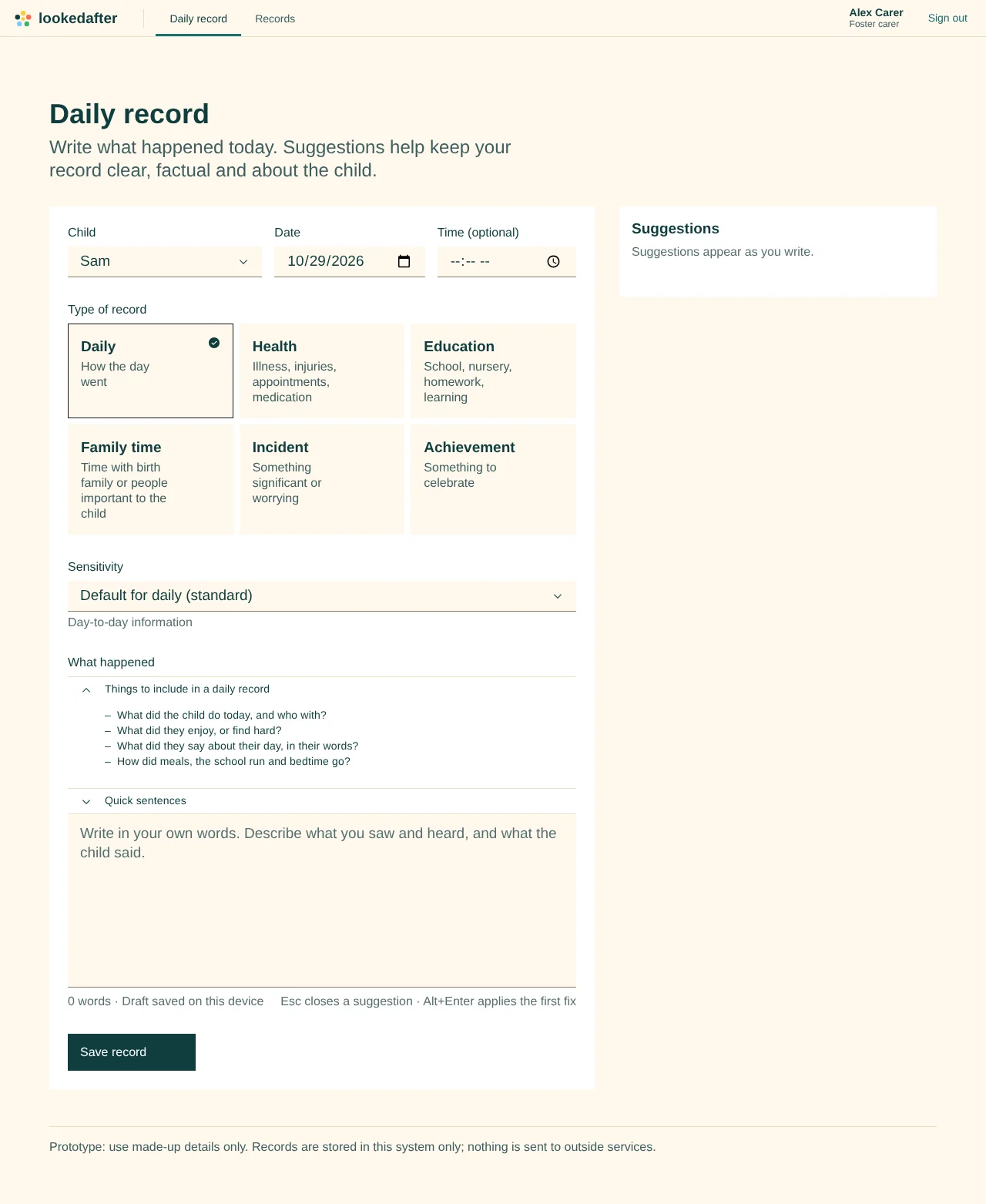
The lookedafter Daily record page: choose a child, date and type of record, then write what happened. Prompts suggest what to include, and a Suggestions panel sits beside the text box.

2026 · My own project: concept, design and build

lookedafter

Foster carers write a daily record for every child in their care, often late at night after a hard day. Those records follow the child for life, and young people can read them as adults. I designed a writing tool that helps carers record clearly and fairly as they type.

The project is shaped by my own experience of the care system.

Outcome

A working service where suggestions appear as carers type, and no child's text is ever sent to a third party.

  • UI / UX design
  • Privacy by design
  • Accessibility
  • React
  • Carbon
Read more about lookedafter
The interaction
Suggestions are based on foster care recording guidance. The checker flags 5 things:
  • labels and jargon, such as "attention seeking" or "meltdown"
  • opinion written as fact
  • missing times
  • interpretation without evidence
  • places where the child's own words should be quoted
Each suggestion explains why, so carers learn instead of just clicking. Suggestions are optional: the carer always has the final word.
Privacy and safeguarding
Records about children are some of the most sensitive data there is. The writing checker runs inside the service itself, so text never goes to an outside grammar or AI service. I designed access around the real roles in fostering: carers see only the children currently placed with them, social workers see their caseload, managers can pause access while an allegation is looked into, and young people can read their own records from their 18th birthday.

What I would do next

I'm continuing to test this with family and friends who are involved in foster care. We aim to build a tool that works for them, then expand to providing it as software for local authorities. The idea comes from my own experience working with Lancashire County Council, where I noticed pitfalls in their systems.

Try it: a working recreation of the checker's core interaction, not the production tool.

Edit the text or apply a suggestion.
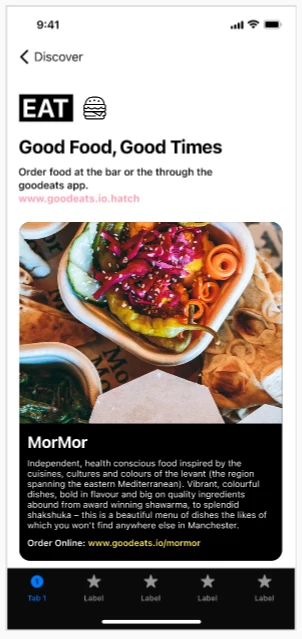
    Loading screen: the Hatch logo on a yellow background.Discover page: four shortcuts for events, rewards, alerts and booking a table, above the Hatch logo and a Discover section with a Drink tile.Drink page: a fixed Drink heading above a scrolling list of trader tiles, each with a photo, name, short description and an order online link.Eat page: the same layout as the Drink page, showing a food trader tile.

    2020 to 2022 · Freelance design and build

    Hatch

    The loyalty app for Hatch, a Manchester venue of independent food, drink and retail traders. People discover events and offers, collect points with every purchase and redeem them for rewards, all from a scannable card on their phone.

    Outcome

    Launched on the App Store and Google Play, and used by real venues to run their loyalty schemes.

    • Mobile
    • React Native
    • Expo
    • React Aria
    • Firebase
    Read more about Hatch
    The interaction
    The Discover page puts 4 shortcuts at the top: events, rewards, alerts and booking a table. On the Drink and Eat pages, the heading stays fixed while the list of traders scrolls beneath it, so people always know where they are. Each trader tile links straight to ordering.
    Loyalty progress is shown as steps instead of a bare number, with countdowns on limited offers.
    Working with the client
    I shared screen designs as an annotated deck. The client's notes on each screen became the list of behaviours we agreed, such as which parts of a page stay fixed and which scroll.
    Accessible from the start
    Built on React Aria, so focus, labels, announcements and touch interactions work properly on iOS and Android.
    Role
    Freelance design and build, from first screens to store release
    Client
    Hatch, Manchester
    Platforms
    iOS and Android
    Screens shown
    Loading, Discover, Drink and Eat, from my version 2 designs
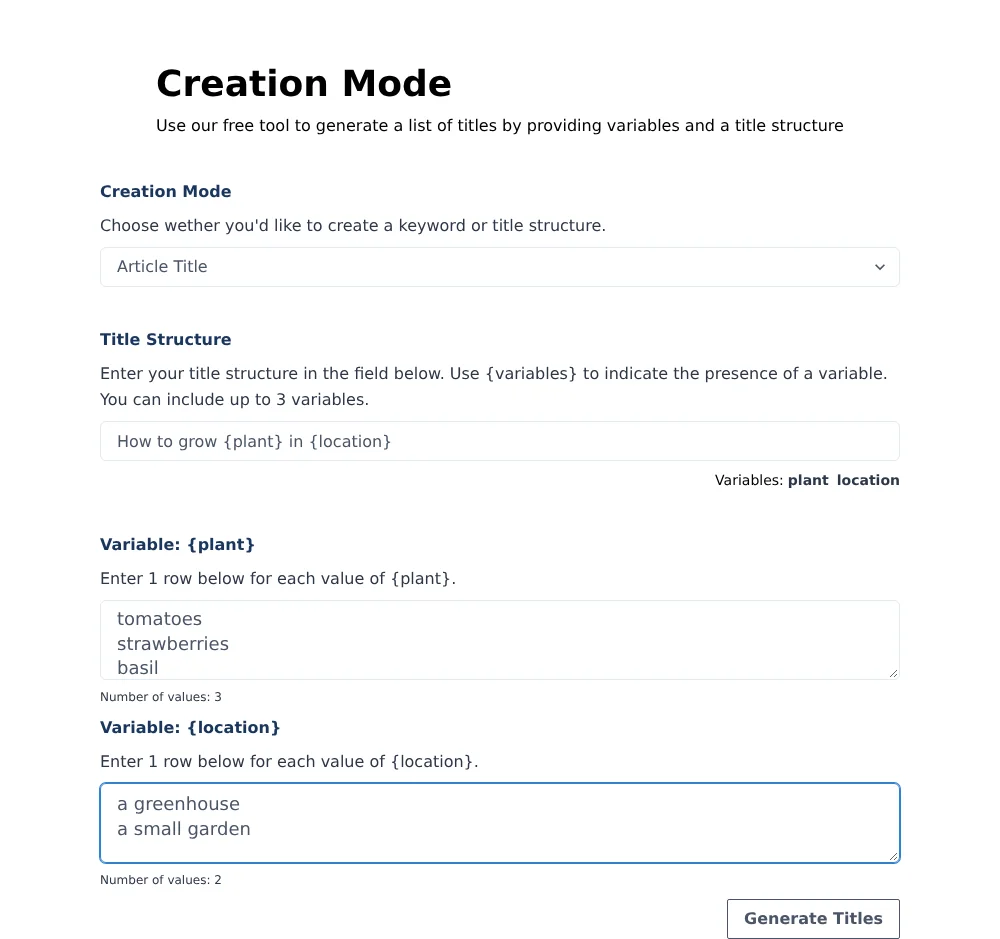
    The proof of concept's Creation Mode page. The title structure 'How to grow {plant} in {location}' has produced one box of values for each variable: 3 plants and 2 locations.

    2024 · Freelance design and build for a start-up

    AutoGenAI

    A start-up wanted to know if marketing teams would pay for AI that writes content in bulk. I designed and built the proofs of concept that answered the question, and they grew into the AutoGenAI product.

    Outcome

    The proofs of concept became AutoGenAI.

    • Prototyping
    • AI tools
    • Next.js
    • OpenAI
    • Chakra UI
    Read more about AutoGenAI
    The interaction
    Instead of writing one prompt at a time, people write a single title structure with up to 3 variables in curly brackets, such as {plant}. A box appears for each variable, they add one value per line, and the tool shows how many articles that makes and what they'll cost before anything is generated.
    What I built
    I built 4 tools:
    • a playground for trying single prompts
    • bulk content creation from title structures
    • batch editing to check and fix results
    • projects to keep work together

    View the proof of concept (opens in a new tab)

    Try it: this recreation builds the prompts but doesn't call an AI.

    Put variables in curly brackets, for example {topic}.

      More work

      Smaller projects and websites

        How I work

        4 things I try to do on every project, with an example of each

        1. Design for everyone

          I start with who will use the service, when, and under what pressure. On lookedafter, every colour pair passes WCAG 2.2 AA, and the service works on a phone and by keyboard.

          lookedafter case study

        2. Decide with evidence

          I test ideas with the people who will use them. lookedafter is being tested with family and friends involved in foster care, and shaped by what I saw working with Lancashire County Council.

          lookedafter case study

        3. Make ideas real, then iterate

          I prototype in code early so people can try an idea, not just look at it. AutoGenAI started as a set of small proofs of concept.

          AutoGenAI case study

        4. Explain the design

          I write down decisions, agree the words we use, and share components and tokens, so other people can follow the thinking and challenge it.

          lookedafter case study